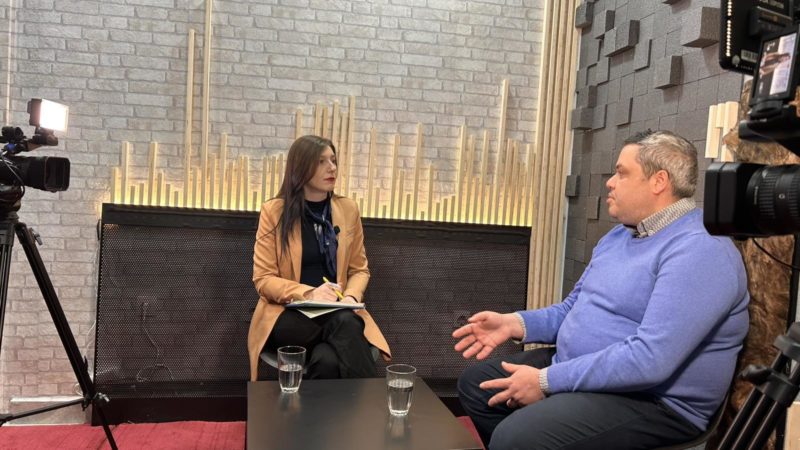
In this episode we discuss the role of the religions in the post conflict period on the Balkans. How did the religions contribute to making peace and are we living in a harmonized society today? On these topics, Evi Shkopi is talking with the teologist and sociologist Musa Musai about the Islamic point of view, and Kristina Atovska is talking with the Professor and Priest Milan Gjorgjevic about the Orthodox point of view.
In this episode, we dive into a topic with deep historical and political weight — the Law on Amnesty and its impact on transitional justice processes in North Macedonia. We explore how amnesty has been used in the past, what it aims to achieve, and whether it truly contributes to social reconciliation — or simply covers up injustices.
Is amnesty a step toward justice — or a detour away from it?
A conversation that challenges official narratives and sheds light on the role of the state, victims, and justice in a society striving to heal past wounds without forgetting them.
The Balkans remain a region marked by a painful history of wars, conflicts, and ethnic divisions. In this conversation, we explored the psychological and social consequences of these events, and how societies can or should engage with their past to build a peaceful future. We discussed transitional justice, the importance of remembrance versus intentional forgetting, the role of forgiveness, and the challenges of interethnic dialogue. Questions were raised about how communities can heal, how individuals confront trauma, and whether reconciliation efforts—both local and international—can foster trust and collective identity after conflict.
In the first episode of our new podcast series, Balkan Perspectives, we talk about Transitional Justice, what does it mean, and how have countries in the Balkans dealt with it? Why don’t we learn about it as a subject in schools, even though it’s so important? To answer these questions, we talked to University Professor Blagoj Conev, who explains the basics of Transitional Justice and why it is important for our region.