Report from Kiev and a conversation about Serbian student blockades
Ukrainians will welcome the third New Year with war. The situation on the fronts has little chance of
changing without a political solution, but therefore the activities for making plans for the reconstruction
of the country in the post-war period are becoming more prominent. From Ukraine, we include Iryna
Drobovych, founder of the The Day After Foundation, with whom we discuss the need to plan and
inspire the reconstruction of Ukraine in advance.
In Serbia, however, the protests became massive after students from all faculties went on a blockade.
They received support from professors, and after them the High School Students' Union also started to
block. Our film director Leonid Velkovski, who studies at the Novi Sad Faculty, is also a guest in today's
edition of Labyrinth. We discuss the activities and demands of Serbian students.
Analysis with General Arsoski about Macedonian relations with neighbors and global
military players
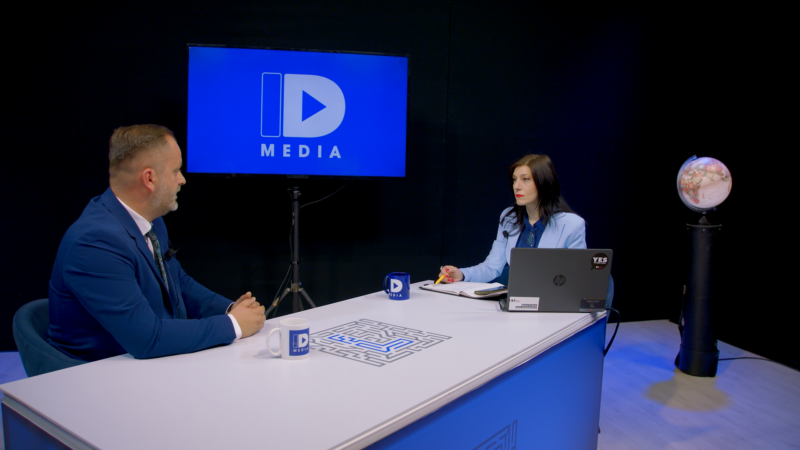
The guest in this edition of Labyrinth is Major General Pavle Arsoski, who in the last elections was also
elected as a deputy in the Macedonian Assembly from the ranks of the new political party ZNAM. We
discussed the future steps of the Macedonian Government regarding the respect of international
agreements, as well as the relations between the coalition partners. The General says that everything is
already clear regarding the observance of international agreements, namely that the agreements will be
respected where they should, and the Government will make great efforts to improve good neighborly
relations.
With General Arsoski, we also discussed the regional open issues, as well as the active military hotspots
and the possibility of ending them. General Arsoski reiterated the position that the attacked side has the
right to defend itself, and he sees the end of the two active wars in the very near future. For the new
Secretary General of NATO, Rutte believes that he is an excellent choice for the Alliance.
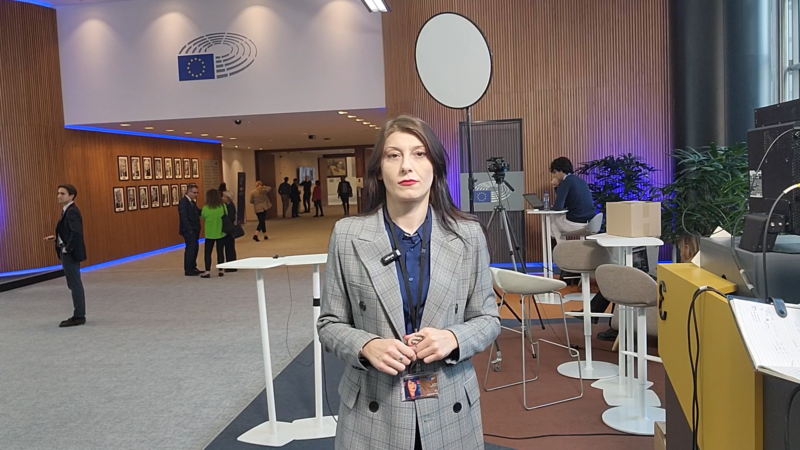
Лавиринт ја проследи конститутивната седница ЕУ-МК во Европскиот Парлмент кој сега има ново парламентарно мнозинство.
За претседаравач беше избран Карло Реслер од хрватската ХДЗ која е член на мнозинската парламентарна група на Европската Народна Партија. Тој во изјава за Лавиринт вели дека е поддржувач на нашиот евроинтегративен пат и дека Парламентот ќе се обиде да одигра конструктивна улога во надминување на проблемите.
Legal analysis of the decision of the International Criminal Court and the proceedings in front
of the Macedonian courts.
The International Criminal Court has issued an arrest warrant for Israeli Prime Minister Benjamin
Netanyahu, his defense minister and three Hamas leaders. What this means, who would arrest
Netanyahu, and where he is safe from criminal prosecution, we talk to lawyer Yasmin Kalach. Kalach
does not believe that the Israeli prime minister would travel to countries that are signatories to the
Rome Statute to avoid being detained. Israel's argument that this decision equates both sides is
untenable, the lawyer believes, and says that the court made such a decision because it is not selective.
Meanwhile, Spain, Ireland and Norway have recognized the Palestinian state.
We also discussed the two legal processes currently underway in Macedonia: the detention of Supreme
Judge Georgiev for taking a bribe, as well as the extradition of the double murder suspect Palco and the
start of his trial. Watch the full analysis.