We dedicate this Labyrinth to the topic: detecting the lie. The two experienced polygraphists, Nikola Bozinovski and Mirjancho Atanasovski, explain everything we need to know about this device and, through simulation, show us what a polygraph test looks like. In addition, they brought the new Eye Lie Detect device to the studio with which we also did a simulation to show how it works. We also talked about other devices and ways to detect a lie, but also about the myth that we all believe that the polygraph can be faked. We also talked about whether and for which health conditions the device cannot be used, about the idea of testing the customs, as well as about the tricks that people used in an attempt to manipulate the results. The polygraphists explain in detail and scientifically why it is not possible to manipulate the device and say that the polygraph, apart from the security services and criminology, is more often used to clarify private and business issues.
Reporting by Jalyssa Dugrot from the USA and an interview with the leader of the New Democratic
Party, Miloš Jovanović.
It's been 100 days since Trump took office, and he's already facing protests across America. Increased
tariffs on a wide range of countries, controversial immigration policies and an inability to end the war in
Ukraine are some of the policies that have marked the first 100 days of Trump's presidency. Tariffs on
neighboring Canada have brought down Trudeau's government, and Canadians have elected former
Federal Reserve Governor Mark Carney as their new prime minister to deal with the economic crisis. We
talk to Florida-based reporter Jalyssa Dugrot about these topics.
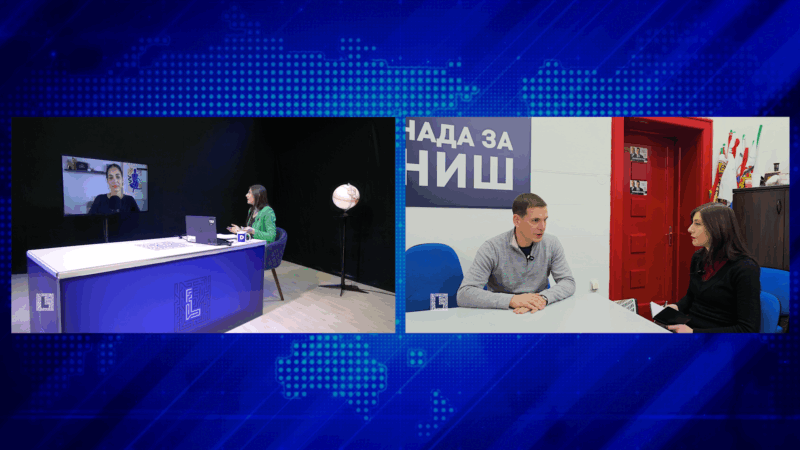
In this episode, we also share an interview with the leader of the New Democratic Party of Serbia, Miloš
Jovanović, which we conducted at the protests in Niš. Jovanović is also a member of the Serbian
Parliament and a supporter of the protests. We discussed the current situation in Serbia, possible
solutions for how to achieve fair elections, and potential coalitions in the next election cycle.
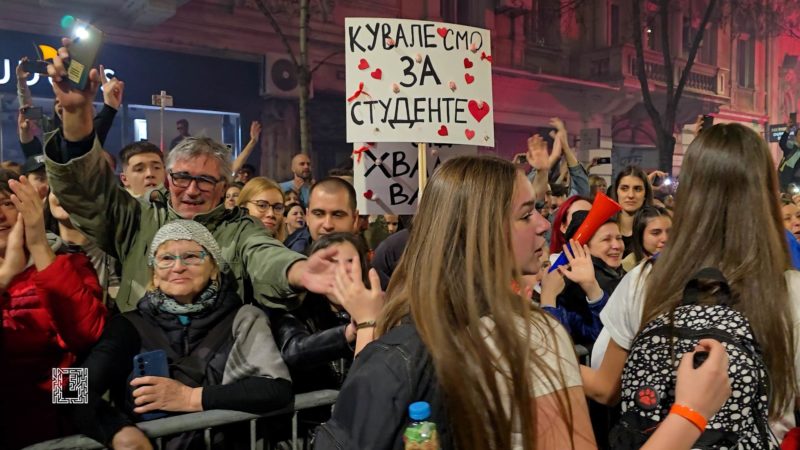
Reportage from the biggest protest Belgrade has ever seen
Due to the days of silence, we decided not to publish any other content, so today we are publishing the
reportage from the big protest that took place in Belgrade on March 15th.
We welcomed the three walking groups of students who arrived the day before and followed the entire
protest to the end. We talked to several Serbian actors about the current situation, as well as some of
the students, bikers and citizens. A sound cannon was also used at the protest, and one of the injured
students told his experience in the Labyrinth. Watch the full episode.
Interview with the Italian journalist and writer, Cristina Brondoni
The guest in this edition of Labyrinth is the journalist and writer from Italy, Cristina Brondoni. We
discussed the policy of the Italian Government towards the EU enlargement policy, the support of
Ukraine, as well as the interest of the Italians in the upcoming elections of the Union. Brondoni says that
the Government of Meloni has maintained the policy of support for Ukraine and support for the
enlargement of the Union, especially for the entry of Albania, given the friendly relations of Prime
Minister Meloni with Prime Minister Rama. As for the upcoming European elections, Brondoni says that
the political parties in Italy are more interested in them than the people who think that domestic
problems are more important. We also talked about the media in Italy, the strike of public service
journalists for censorship by Meloni's Government, as well as its structure.