Analysis with General Arsoski about Macedonian relations with neighbors and global
military players
The guest in this edition of Labyrinth is Major General Pavle Arsoski, who in the last elections was also
elected as a deputy in the Macedonian Assembly from the ranks of the new political party ZNAM. We
discussed the future steps of the Macedonian Government regarding the respect of international
agreements, as well as the relations between the coalition partners. The General says that everything is
already clear regarding the observance of international agreements, namely that the agreements will be
respected where they should, and the Government will make great efforts to improve good neighborly
relations.
With General Arsoski, we also discussed the regional open issues, as well as the active military hotspots
and the possibility of ending them. General Arsoski reiterated the position that the attacked side has the
right to defend itself, and he sees the end of the two active wars in the very near future. For the new
Secretary General of NATO, Rutte believes that he is an excellent choice for the Alliance.
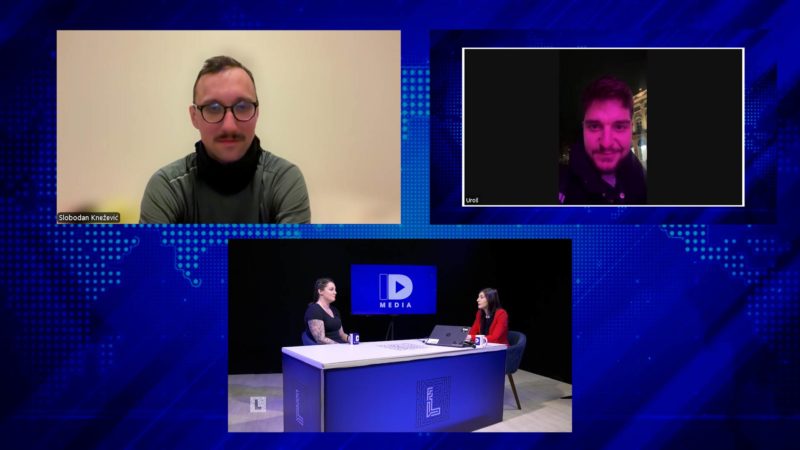
Serbian students are cycling to Strasbourg. They were welcomed in Bratislava, Budapest where they received support from the mayor of the Hungarian capital, but the biggest welcome was organized for
them in Vienna, where the largest Serbian Diaspora is located. From Vienna, immediately after their arrival, we spoke with Slobodan Knježević, who decided to join the students in this feat, and Uroš Petrović, who is studying for a master's degree in Vienna, and was at the square to welcome the cyclists.
In this edition of Labyrinth, a US military pilot was a guest in our studio, with whom we talked about how she made the decision to fly and what the path to that position was.
IDMedia
Interview with the Director of GIZ for North Macedonia, David Oberhuber
For underdeveloped or less developed countries, financial support from the international community is
extremely important. After the major changes that have occurred in the United States, which have
affected the civil society sector, part of the media, as well as state institutions, the question arises
whether other countries will follow the same example. Specifically, today we are discussing whether
Germany will maintain its current policy of helping the underdeveloped. We are discussing this with the
Director of the German International Cooperation Agency GIZ, David Oberhuber.