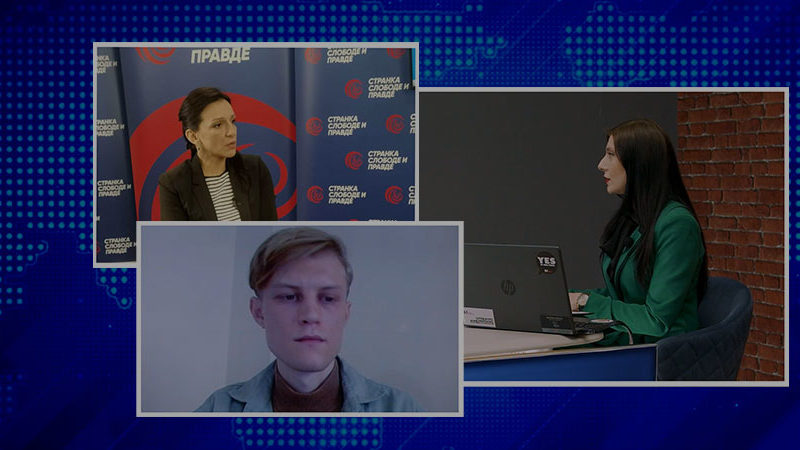
In the first March edition of Labyrinth, we talk about women in the private security sector with the Secretary General of the Chamber of Private Security, Sanja Kermetchieva. Similar to the state, in the private security sector only 10% of the employees are women. As long as we talk about quotas, as long as we count how many women are in certain positions, regardless of whether it is in the highest state positions, whether it is a position of women managers, whether they are in rectors, in dean's
administrations and so on, in any which position or in specific jobs in security, how many women are police officers, how many in private security, how many are soldiers... Until then and while we are talking about this and while there is a need for special conventions, special laws and policies in companies, we are facing with gender inequality.
Interview with security expert and former advisor to the Ministry of Defense, Emir Hasanović
Former Defense Minister, Radmila Sekerinska has been appointed Deputy Secretary General of NATO,
making her the first Macedonian woman to hold a high position in the world’s most powerful military
alliance. Sekerinska was at the helm of the ministry at the very moment when NATO accession took
place, and her appointment can only be positive for our country – believes security expert and former
advisor to the Ministry of Defense, Emir Hasanovic. We also discussed future expectations from the
Alliance, as well as current European and global security issues.
Legal analysis of the decision of the International Criminal Court and the proceedings in front
of the Macedonian courts.
The International Criminal Court has issued an arrest warrant for Israeli Prime Minister Benjamin
Netanyahu, his defense minister and three Hamas leaders. What this means, who would arrest
Netanyahu, and where he is safe from criminal prosecution, we talk to lawyer Yasmin Kalach. Kalach
does not believe that the Israeli prime minister would travel to countries that are signatories to the
Rome Statute to avoid being detained. Israel's argument that this decision equates both sides is
untenable, the lawyer believes, and says that the court made such a decision because it is not selective.
Meanwhile, Spain, Ireland and Norway have recognized the Palestinian state.
We also discussed the two legal processes currently underway in Macedonia: the detention of Supreme
Judge Georgiev for taking a bribe, as well as the extradition of the double murder suspect Palco and the
start of his trial. Watch the full analysis.