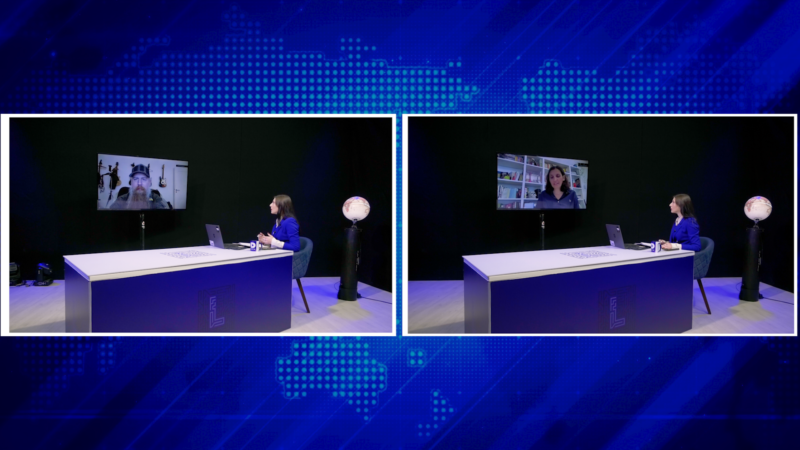
A series of interviews about crisis areas and personal experiences of journalists and humanitarians - Sееma Jilani, Michael Bociurkiw, Adelin Pertisor and Giorgi Dolidze in this Labyrinth.
This week, Labyrinth in Tbilisi at one of the biggest journalism events - the ZEG Festival. We had the opportunity to talk to journalists from all over the world about the current situation in their countries. We present you a series of interviews about the countries that are currently in the global focus.
We spoke with one of the keynote speakers at the event, a doctor who has dedicated her life to treating children in the most vulnerable places in the world, Seema Jilani. We talked about the great humanitarian catastrophe unfolding before our eyes, the Gaza Strip, and how we can help people cut off from all help. Seema also shared her personal experience of what it feels like to treat her own child injured in an explosion in Beirut.
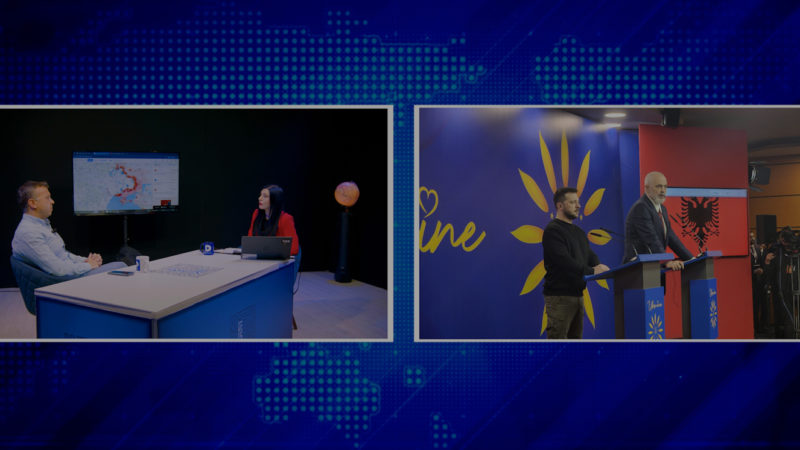
The war in Ukraine is still raging, and since the coming to power of US President Donald Trump, Russian attacks on the Ukrainian capital seem to have increased. Meanwhile, in the Middle East, Israel and Iran are fiercely attacking each other. We talk about the situation in Ukraine and the current hot spots in the Middle East with Atlantic Council analyst Michael Bociurkiw, who regularly analyzes for CNN and other global media.
At the event, we also had the opportunity to talk with our colleague Adelin Pertisor from the Romanian public service, who is one of the most experienced war reporters. He reported on wars in the Middle East, Africa, as well as the Balkan conflicts and had the opportunity to interview a large number of leaders, but also some notorious militants such as Željko Ražnjatović - Arkan. Of course, we also talked about the situation in Romania after the annulled elections when the Constitutional Court recognized Russian influence in the electoral process.
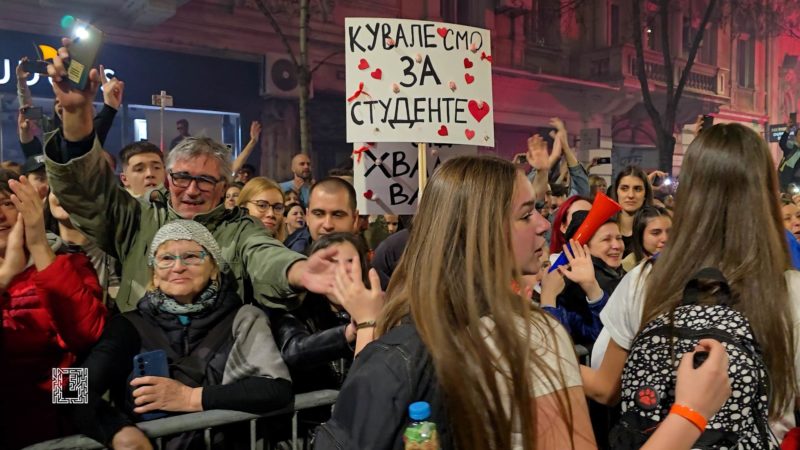
Since Georgia got a new pro-Russian President who imposed a series of undemocratic laws, Georgians have been protesting every day. Media freedom and civil society are under attack, and journalists and citizens are facing prison sentences. We talk to Georgian colleague Giorgi Dolidze about what is happening in his country.
Watch the full episode.
You Might also like
-
People in Beirut sleep on streets and beaches because buildings are targeted
An interview with award-winning humanitarian from Beirut, Marina El Khawand
The war in the Middle East is heating up. After the attacks carried out by Iran on Israel, Israel began a heavy bombing of its Hezbollah proxy in Lebanon and continued heavy attacks on the Gaza Strip. In this Labyrinth, we talk to award-winning humanitarian and fighter for equal and free access to medical care, Marina El Khawand.
We discussed the current situation in Lebanon with refugees and people receiving evacuation orders in the middle of the night, the basic needs of water, food and medicine, as well as the role Hezbollah plays in Lebanese society.
Watch the full episode.
Post Views: 861 -
Georgia in post-election chaos – USA at pre-election crossroads
Analysis of the Georgia election and a Florida survey on American expectations.
Less than a week until the most important American election in modern history. For Labyrinth, colleague Jalyssa Dugrot from Florida talked to young people about their views and expectations of the presidential candidates.
Georgia, on the other hand, is back on its feet after the elections in which the ruling "Georgian Dream" won. The people, the opposition and the international public do not recognize the results. Hungarian Prime Minister Viktor Orbán is the only European leader who appeared in support of his Georgian colleagues. We talk to Ekaterine Basilaia - director of the Center for Media and Social Research of Georgia about the atmosphere in Tbilisi and the reactions after the elections.
Watch the full episode.
Post Views: 694 -
Old parliamentary majority – tectonic changes in some member states after the Union elections
Analysis with Andreja Stojkovski: the European elections and Macedonian bilateral relations with the neighbors
The European elections ended without a change in the parliamentary majority, but with an increase in the number of far-right MPs. The composition of the European Parliament may not undergo major changes, but changes are taking place in the domestic politics of member states with great political influence. What this will mean for the Union and its individual policies in the future, we analyze with Andreja Stojkovski from the Prespa Institute. The enlargement policy, the green agenda, as well as the Common Foreign and Security Policy are some of the topics we discussed. We also analyzed our strained relations with our neighbors and the expectations from the future Macedonian Government when it comes to bilateral agreements with the neighbors.
Post Views: 1,408